
11/02/2009

A new way of thinking for Fibromyalgia


There are specific ways to move your body that will minimize pain and discomfort.
1. Arms stay at home.
2. Unload the back.
3. Support always welcome.
4. Be naturally shifty


Rule 1: Arms stay home

Fibromyalgia muscles in the neck, shoulders and upper back areas do not appreciate activities that involve reading or overhead use of the arms. Isometric contractions where muscles stay contracted continuously causes decreased oxygen in the muscle, and increased pain. Any time the arms are away from the body, the trapezial, scapular, shoulder, and upper back muscles all go into Isometric contractions which usually results in increased pain even after only a few seconds of the offending activity. Because we are focusing attention on our hands and on whatever objects we are reaching for or working on, we may not notice the early discomfort signals arising out our neck, shoulders and upper back until it is too late.


The favored position for our arms is at the sides and below the shoulders, with elbows touching our sides and bent at the 90 degree angle. We should try to maintain this position to the point where we move our whole body, not just our arms to confront each specific task. Arms stay home (with the rest of our body) and do not reach away.



Rule 2: Unload the back

There are multiple internal and external muscles that must be equally balanced to maintain proper alignment of the lower back and pelvic areas. If anything causes a shift in this alignment, the mechanical imbalance and subsequent misalignment can result in pain. Any activities that tend to increase the load on the back - such as bending forward, prolonged standing, bending at the waist to pick up an object, or arching the back - should be avoided to help lessen the chance of unwanted pain.


By unloading our backs, we can avoid the offending positions in the first place. For example, flexing our hip by putting one foot on a stool is an excellent way to unload the back when we are standing.


Crossing our legs, or putting our feet up on a foot rest unloads the back when we are seated. Lying in the fetal positions to sleep will unload our back, and placing a pillow between the knees is especially effective at taking pressure off the hips and sacroiliac regions.


Rule 3: Support always welcome

When we hold our bodies in unnatural or awkward positions, we put more strain on our joints and soft tissues.


Pain-inducing positions include:

Head turned to the side or looking up

Arms outstretched or overhead
Elbows away from the body
Wrists bent
Palms up
Leaning forward
Bending


We can't always avoid putting our bodies in these positions. To decrease the painful effects, take advantage of existing structures in our environment to relieve some of the force on our bodies. We can support our back by sitting in a chair with a good seat and back, leaning against a wall or other object, and wearing a back brace. We can support our arms on chair rests, tables, our laps or stomachs, or by using one arm to support the other.


The days are long, and our muscles work hard to support us and get us from one place to another. When we have fibromyalgia, our muscles hurt before they become noticeably tired. It's okay to use extra support to relieve our muscles whenever we can.


Rule 4: Be Naturally Shifty
This rule emphasizes maintaining natural or neutral body and joint positions, but at the same time periodically moving the muscles around and shifting them. Keeping our muscles moving is one way to avoid the painful tightening and spasms that occur when we are in one position for too long. We must learn to automatically alternate between various positions such as sitting, standing, and walking to relax and stretch the various muscle groups regularly.

Our head position needs to be shifted frequently as well, If we spend too much time looking up or down, or to one side or the other for long periods of time, our neck pain will increase.

Examples of Using Fibronomics

To avoid pain-inducing behavior when performing your daily activities, here are some examples of applying Fibronomics.

1. Reaching up to change a light bulb.
Use a stable stool or ladder to stand on and get closer to the light fixture. Support your arm with your other hand at your elbow while turning the bulb.

2. Prolonged driving:

For part of the time, keep you hands at 10:00 and 2:00 positions on the steering wheels. After a while, shift your hands to the 4:00 and 8:00 positions. Use armrests, and move your seat slightly closer to the steering wheel.

3. Washing dishes:
Keep your back straight and elevate on leg on a stool. Use sponges and scrubbers with long handles

4. Applying makeup:

Don't tilt your head back to use a wall mirror. Instead, place a magnifying mirror on a counter top or dresser.

5. Reading and studying:
Prop your book on your desk or table so you are holding your head in a more comfortable position. Cross and recross your legs periodically. Set a timer to remind you to alternate positions at least every thirty minutes. Move from a chair at your desk to another char in your office. If you're at home, lie down on a couch with a pillow propped behind your head.

6. Standing up from a lying-down position:

Use a "log roll" technique. Roll on your side then curl your legs so your knees come forward and over the edge of the bed or couch. Use your arms to push yourself to a sitting position while swinging your legs off the edge.

Use the rules of Fibronomics to examine everything you do in your day. First determine why an activity may be causing pain by identifying the Fibronomics rule that are being violated. Then analyze how you can correct the violations and practice new strategies until they become automatic. Keep these in mind, so you don't have the Fibropolice ticketing you for repeated violations! ;)

The above excerpt is from Dr. Pellegrino's new book, "The Fibromyalgia Survivor. "


Disclaimer

The information in this site is provided for informational purposes only and in no way should be taken to be the provision or practice of physical therapy, medical, or professional healthcare advice or services. The information should not be considered complete or exhaustive and should not be used for diagnostic or treatment purposes without first consulting with your physical therapist, occupational therapist, physician or other healthcare provider. The owners of this website accept no responsibility for the misuse of information contained within this website


If you discover any copyright infringement of your material or if copyright owners feel differently of this blog's content, they can send an email and the content will be taken down immediately.



Dealing With Fibromyalgia


What's Going On? A Simple Explanation of Fibromyalgia.

Making Sense of a Complex Disorder, For Those Who Don't Have It. ~About.com


Getting a diagnosis of Fibromyalgia (FMS) is as devastating as getting a diagnosis of diabetes. Diabetes is named "the silent killer." I call FMS the "silent destructor." As with diabetes, you can't see the malfunction and in most cases don't even know a person has either disease.

Most people with a chronic illness are always sick. The effects on the body of cancer, a virus, or a degenerative disease are fairly constant. It's understandably confusing to see someone with fibromyalgia be unable to do something on Monday, yet perfectly capable of it on Wednesday.

Look at it this way: Everyone's hormones fluctuate, and even things like weight and blood pressure can rise and fall during the course of a day, week or month. All of the systems and substances in the body work that way, rising and falling in response to different situations.

Research shows conclusively that fibromyalgia involves abnormal levels of multiple hormones and other substances. Because those things all go up and down, sometimes one or more are in the normal zone and other times they're not. The more things that are out of the zone, the worse they'll feel.


For the people in your life who don't understand your Fibromyalgia pain...

Invite them to take Clothespin Challenge:


Here is how it works:


  1. Place a clothespin on your finger
  2. Set a timer for 30 minutes
  3. See how long you can bear the pain. Did you leave the clothespin on for 15 minutes? 10? 5?
  4. NOW. Imagine this pain forever... This should help you understand what it is like to live with constant pain - but people with FM can't just "remove" the pain the way you can remove that clothespin!


“Fibromyalgia means living with stabbing, burning, throbbing pain every day,” says Lynne Matallana, president of the National Fibromyalgia Association
  1. Learn to listen to your body, and do not push yourself to meet unrealistic goals.
  2. This is especially hard to do if you have been used to leading a very active, busy life.
  3. You must slow down and give your immune system a chance to heal.


On bad days, people living with Fibromyalgia describe their pain as tender, shooting, numbing, tingling, burning, throbbing and unbearable. Coping with Fibromyalgia on a bad pain day or 'flare up' can be stressful. The following tips can help those in a flare deal with their chronic pain and hopefully, lessen the stress of a bad pain day.


Know Your Triggers

If you have fibromyalgia, chances are you know what makes it worse. The first tip to dealing with your chronic pain is to avoid the triggers that make your pain worse. This isn't always possible, but when dealing with the chronic pain of fibromyalgia, avoiding the bad days at all costs is the key to coping.

Try the following tips to help avoid the bad days.


  • Avoid Stress: This is a hard one. But stress and excitement can cause flare ups for those with fibromyalgia. The best way to avoid stress is to try and cut it off at the path. Learn to say no once in awhile to invitations so you don't overbook yourself. Take some time for you each day. Avoid jobs that involve stressful deadlines.

  • Practice Pacing. When you have a chronic pain condition, you have to take things slow. Sometimes this is frustrating. But flares often come up in fibromyalgia when, on a good day, a person decides to run several errands, clean the entire house, or exercise heavily. Instead, try to keep your routine even. Clean one room in your house at a time. Stop and rest every few minutes between activities. And have a set exercise routine that you follow on good days and bad pain days.

  • Learning to say NO is vital to this process of healing: A simple 'NO' - to family, friends and colleagues- it is ok to say NO when you are having your Fibro day.
    "No, I don't feel like shopping today. No, I will not cook tonight. No, I
    don't want to go out. No, I don't want to join them for a walk."


Coping with Pain

On a bad pain day the only thing you want to do is crawl under your sheets. Unfortunately, kids, errands, work and even pets can keep this from happening. Still there are some things you can do to deal with a chronic pain flareup.


  1. Take Inventory. On bad pain days it is easy to get overwhelmed by your pain. Take a good half an hour to evaluate where you hurt and how much. Use pain scales to evaluate how much pain you are in and what type of pain you are in. In the article, "The Purposes of Pain Scales" by Rhonda B. Graham of InteliHealth, "Pain scales are tools that can help your doctor diagnose or measure your pain's intensity." Evaluating your own pain levels can help you understand how best to cope with your fibromyalgia symptoms.
  2. Evaluate Options. Think about the resources you have on hand to deal with your pain. If your pain is lower on the pain scale, what alternative or non-drug therapies might help? Do you need to book an appointment for a message? Take a warm bath? Lay down for an hour or two? Talk an easy walk around the block? If your pain is higher on the scale, which non-drug or drug therapies work for you? Do you need to call your doctor for refills? What might you need to make you feel better? Gather your favorite symptom relief remedies and put them in one place for easy access. Make sure it is light in case you want to move it around the house with you.
  3. Prioritize. With chronic pain it is easy to throw away an entire day. Instead, focus on the items on your to-do list that you can accomplish. This will keep your stress from piling up, can keep pain from the forefront of your thoughts and you may even feel better having accomplished something for the day. For instance, if you had an important work meeting, can you arrange your day to make the meeting, but to skip everything else? For chores, maybe you can't clean the whole house, but can you load the dishwasher, taking small breaks in between to rest? If you are at a high pain level and staying camped out on the couch or in bed is your only option--can you work on a project from your computer or do light exercises from your couch?
  4. Call for Help. Sometimes, pain is too intense to think away. When this happens it is best to have a list of numbers on hand to call in extra resources. Make sure you have a variety of numbers on hand so you aren't calling the same person all the time. Numbers that should be on your list include family, close friends, your doctor(s), babysitter, dog walker, and friends from a fibromyalgia support group. If you pain level gets very intense or you suddenly worsen, make sure you have the number to your local emergency room and any other emergency services on hand.


Fibromyalgia and the importance of family support.

Every family member needs to understand the cycles of pain and fatigue associated with fibromyalgia. They need to learn how to cope with these cycles because life goes on, and family members need each other.

If the chronic pain, depression, and anxiety are not enough then there is the loneliness that comes when everyone thinks you are crazy and turns their back on you. On the other hand, you just get tired of trying to explain what fibromyalgia is repeatedly.

Regardless of whether you understand what someone is going through or not, remember it could happen to you!


Use of the information at these sites is at your own risk. We recommend that you consult with your personal physician before beginning or modifying any treatment or exercise regimen.


Disclaimer

The information in this site is provided for informational purposes only and in no way should be taken to be the provision or practice of physical therapy, medical, or professional healthcare advice or services. The information should not be considered complete or exhaustive and should not be used for diagnostic or treatment purposes without first consulting with your physical therapist, occupational therapist, physician or other healthcare provider. The owners of this website accept no responsibility for the misuse of information contained within this website.

If you discover any copyright infringement of your material or if copyright owners feel differently of this blog's content, they can send an email and the content will be taken down immediately.


Diagnosis


How Is Fibromyalgia Diagnosed?

Diagnosing fibromyalgia syndrome is difficult.

Find out why doctors must first exclude other possible conditions and how they diagnose fibromyalgia or chronic fatigue.

Another reason fibromyalgia diagnosis remains difficult is that there are currently no diagnostic laboratory tests for fibromyalgia; standard laboratory tests fail to reveal a physiologic reason for pain. Because there is no generally accepted, objective test for fibromyalgia, some doctors unfortunately may conclude a patient's pain is not real, or they may tell the patient there is little they can do.


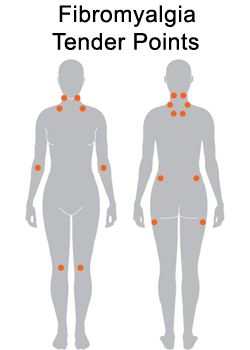
Trigger Points:
Trigger points are symmetrical, with 9 pairs (18 total) points on the body.
For a diagnosis of Fibromyalgia (FM) at least 11 trigger points will be painful when pressed.


The symptoms are many and they can fluctuate like crazy -- one day you feel pretty good, the next you can barely walk, the next you're OK physically but just can't concentrate or communicate effectively.

How can you and your doctor figure out what is going on with you?

A symptom diary can be a big help. By keeping daily track of how you felt and what you did, you may be able to find patterns or identify triggers. Maybe you're most tired the day after you go to the grocery store, or perhaps your flare-ups regularly start 14 days into your menstrual cycle. A diary can help you and your doctor spot these kinds of thing when you might otherwise miss them.

A diary also can help your doctor determine which symptoms are bothering you most often. If you typically see your doctor toward the end of the day, pain may be more prevalent in your mind because you're achy then, whereas a diary might show you're exhausted every day, but only bothered by pain 3 or 4 days a week.

Knowing what symptoms you experience most, and to what degree, can greatly help shape your diagnosis and treatment, as well as help you make decisions about life-style changes and plan around things that are predictable.


What You Need:
A Good Relationship With Your Rheumatologist Or Doctor.
A Physical Therapy Regimen You Will Follow.
A Treatment Program Involving Medication And Exercise.
A Good Understanding Of Meditation And Relaxation Techniques.
Ongoing Education - Stay Aware Of Fibromyalgia News And Research.

Preparing for your appointment:
Because many of the signs and symptoms of fibromyalgia are similar to various other disorders, you may see several doctors before receiving a diagnosis. Your family physician may refer you to a rheumatologist, a doctor who specializes in the treatment of arthritis and other inflammatory conditions.

What you can do:
You may want to write a list that includes:
Detailed descriptions of your symptoms
Information about medical problems you've had in the past
Information about the medical problems of your parents or siblings
All the medications and dietary supplements you take
Questions you want to ask the doctor

What to expect from your doctor:
In addition to a physical exam, your doctor may check your neurological health by testing your: Reflexes
Muscle strength
Muscle tone
Senses of touch and sight
Coordination
Balance

MayoClinic.com


Fibromyalgia is a type of soft tissue or muscular rheumatism and does not cause inflammation, joint damage or deformities!


Disclaimer


The information in this site is provided for informational purposes only and in no way should be taken to be the provision or practice of physical therapy, medical, or professional healthcare advice or services. The information should not be considered complete or exhaustive and should not be used for diagnostic or treatment purposes without first consulting with your physical therapist, occupational therapist, physician or other healthcare provider. The owners of this website accept no responsibility for the misuse of information contained within this website.


If you discover any copyright infringement of your material or if copyright owners feel differently of this blog's content, they can send an email and the content will be taken down immediately.

Symptoms


Fibromyalgia has no set symptoms and many combinations from the following list are interwoven:


Central Nervous System: Fatigue, irritability, nervousness, depression, apathy, listlessness, impaired memory and concentration, anxieties and suicidal thoughts. Insomnia and frequent awakening due to pain result in non restorative sleep.

Musculoskeletal: Pain and generalized morning stiffness could arise from muscles, tendons, ligaments and fascia of the shoulders, neck, entire back, hips, thighs, knees, ankles, feet, inner and outer elbows, wrists, fingers, and chest. Injured or old operative sites are commonly affected. Though fibromyalgia is described as a “non-articular” disease many know better: Joint pains with or without swelling, redness and heat are frequent. The litany includes foot or calf cramps, numbness and tingling of the face or extremities.
Irritable Bowel: (Often called leaky gut, spastic colon or mucous colitis). Symptoms include nausea (often brief, repetitive waves), indigestion, gas, bloating, pain, cramps, constipation alternating with diarrhea and sometimes mucous stools.

Genitourinary: Common are pungent urine, frequent urination, bladder spasms, burning urination (dysuria) with or without repeated bladder infections and interstitial cystitis. Vulvodynia (vulvar pain syndrome) includes vaginal spasms, irritation of the vaginal lips (vulvitis) or opening (vestibulitis) and painful intercourse (dyspareunia). It typically mimics a yeast infection but without the cottage-cheese discharge. Intense PMS and uterine cramping are common. Symptoms of fibromyalgia are worse premenstrual.

Dermatological: Various rashes may appear with or without itching: Hives, red blotches, itchy bumps or blisters, eczema, seborrheic or neurodermatitis, and rosacea. Nails are often brittle and of poor quality and hair falls out prematurely. Strange sensations are common such as cold, heat (especially palms, soles and thighs), crawling, electric vibrations, prickling, super-sensitivity to touch, and flushing that is sometimes accompanied by sweating.

Head, Eye, Ear, Nose, and Throat: Headaches (migraines), dizziness, vertigo (spinning) or imbalance; dry eyes as well as itching and burning with or without sticky or crusty discharge upon awakening; blurred vision; nasal congestion and post-nasal drip; painful, burning tongue, mouth and abnormal tastes (scalded, bad or metallic); ringing in the ears (tinnitus) or lower-pitched sounds; ear and eyeball pain; sensitivity to light, sounds and odors.


Miscellaneous Symptoms:
Weight gain; low grade fever; lowered immunity to infections; morning eyelid and hand swelling from fluid retention that gravitates to the lower extremities by evening where it stretches tissues causing the restless leg syndrome.

- abdominal pain
- bladder irritability or spasms
- blurred vision
- chest pains and pressure beneath the breast bone
- cramps
- dizziness
- dry eyes and mouth
- falling
- fatigue
- gastroesophogeal reflux (GERD) – sometimes called heartburn or acid stomach
- general aches and pains
- hearing loss
- intermittent hearing problems and low-frequency hearing loss
- memory and reasoning problems ("brain fog")
- migraine or tension headaches
- morning stiffness
- muscle twitching
- nighttime grinding of teeth (bruxism)
- pelvic pain
- pre-menstrual syndrome
- skin sensitivity to temperature
- sleep problems, insomnia
- temporomandibular joint disorder (TMJ)
- tingling or numbness in arms, legs, feet or face
- water retention and swelling; especially in the hands, face and feet

Symptoms can be made worse or triggered by:

- anxiety
- cold or drafty environments
- depression
- hormonal changes, before periods or during menopause
- physical overexertion
- stress
- weather changes


Pain is the most prominent and common symptom. It can be all over, or in just one main region. Some people describe it as "knife-like" or a "muscle cramp." Some say it’s like having a persistent flu and can be quite severe in some. Other factors that effect pain are level of activity, the weather, a person’s sleep patterns and stress. Most people with FMS say that at least some degree of pain is always present. The pain generally is present in all four quadrants of the body, for at least three months. That means pain is present on both the right and left sides of the body, and above and below the waist.

Another common symptom is mood changes. Many people with FMS report feeling "blue" or "down," but only about 25% of these people are clinically depressed according to past studies. Some people also report being anxious, with difficulty concentrating. They complain of decreased short-term memory and trouble performing simple tasks. Many of these symptoms are also common in anyone whose sleep is disturbed.

Cognitive function can be considered the ability to think, reason, image, remember, or learn words. The available research on cognition in fibromyalgia suggests that cognitive actions are faulty. This impact on cognition may cause some patients with fibromyalgia the most disability.

The lack of mental alertness, or a sort of brain fog, sometimes called "fibro-fog," which can include confusion and forgetfulness, an inability to concentrate and recall simple words and numbers, and the transposition of words and numbers.

Cognitive functions are often so impaired that patients cannot perform the activities of daily living (ADL), getting lost in familiar places or losing the ability to communicate effectively. Patients who work may fear losing their job, and many pediatric patients drop out of school because of their inability to complete their schoolwork.


Standard medical tests come back negative, and often a person "looks" just fine. In addition, symptoms can change from day to day, and even hour to hour. They can also change with illness, stress and increased physical exertion.

Sometimes people are sent for physical therapy, psychological counseling or other inappropriate treatments. Unfortunately, some treatments can actually aggravate FMS.

There seems to be a link between depression, anxiety and FMS but researchers still are not sure if it’s a cause or an effect.


Major symptoms of FMS can sometimes be traced to a triggering event such as:

- prolonged grief
- body trauma, such as an automobile accident
- infection – viral, bacterial or otherwise
- difficulty in pregnancy, labor and delivery
- open-heart surgery

*It is very important to note that even if you have one or more signs and symptoms, it doesn’t mean you have fibromyalgia. You should get a thorough medical exam and rule out any other possible causes for your symptoms.


!!!!!!!!!WARNING!!!!!!!!

Things NOT to say to someone with a disabling chronic condition:
...but you don’t look sick
...if you’d get out more
...if you’d get more exercise
...everybody gets tired
...it can’t be that bad
...you are just lazy
...you are just depressed
...you’ll just have to tough it out
...I wish I had time to take a nap too
...you just need a more positive attitude
...stop whining!
...it‘s all in your head

I would not wish what I have on anyone, but unless you get it, you just don‘t get it. YOU have NO IDEA the amount of suffering I have to endure every single day.


Disclaimer

The information in this site is provided for informational purposes only and in no way should be taken to be the provision or practice of physical therapy, medical, or professional healthcare advice or services. The information should not be considered complete or exhaustive and should not be used for diagnostic or treatment purposes without first consulting with your physical therapist, occupational therapist, physician or other healthcare provider. The owners of this website accept no responsibility for the misuse of information contained within this website.

If you discover any copyright infringement of your material or if copyright owners feel differently of this blog's content, they can send an email and the content will be taken down immediately.

Fibromyalgia


What is fibromyalgia?
Fibromyalgia (pronounced fy-bro-my-AL-ja)
This word is derived from the Latin roots fibro (fibrous tissue), my (muscles), al (pain), and gia (condition of).

This blog is designed to provide you with a better understanding of this chronic pain disorder that affects millions of people worldwide.

You hurt all over, and you frequently feel exhausted. Even after numerous tests, your doctor can't find anything specifically wrong with you.

If this sounds familiar, you may have fibromyalgia.


Fibromyalgia is a frustrating condition both for doctors and patients. The disease is not only difficult to diagnose and but also to treat. It was the simple tasks, such as balancing a checkbook that confused Melissa Noll the most. "I thought I might have early stages of Alzheimer's," Noll says. But her memory problems were a symptom of something else, fibromyalgia, a chronic condition that causes pain and fatigue. "I've lived in this area 15 years, and I couldn't find my way to the bank."


Fibromyalgia is a complex condition that's difficult to understand, especially if you don't have a medical degree. Because it involves the brain and nervous system, fibromyalgia can have an impact on virtually every part of the body.

The average FMS patient suffers for several years and spends thousands of dollars in medical bills before receiving an accurate diagnosis. People are relieved when they finally get a diagnosis and realize it’s not all in their heads.

FMS can have different symptoms each time a doctor is visited, and the symptoms don’t appear to be related to each other. This can be a source of frustration to many physicians, because FMS is very complex. Also, no two people have exactly the same symptoms. Furthermore, the symptoms in a child can be different from those of an adult. Diagnosis in a child is also harder, because children have more trouble describing their pain.

Pain is the most prominent and common symptom. It can be all over, or in just one main region. Some people describe it as "knife-like" or a "muscle cramp." Some say it’s like having a persistent flu and can be quite severe in some.

Other factors that effect pain are level of activity, the weather, a person’s sleep patterns and stress. Most people with FMS say that at least some degree of pain is always present.


The pain generally is present in all four quadrants of the body, for at least three months. That means pain is present on both the right and left sides of the body, and above and below the waist.

Fatigue is also a very common symptom. About 90% of people with FMS have moderate to severe fatigue. This fatigue can range from simple listlessness and decreased exercise endurance to total exhaustion.

Some investigators list many other common complaints, including chronic headaches and tenderness of the scalp to the touch. Complaints of chest pain, shortness of breath, and palpitations are common. Serious cardiac problems should be considered and may require extensive evaluation. Many symptoms in patients with fibromyalgia are related to mitral valve prolapse syndrome.

Technically, FMS is not a disease, but is rather a "syndrome." Fibromyalgia is a specific set of signs and symptoms that occur together. It is chronic, but is not inflammatory, degenerative or progressive.


FMS is systemic however, meaning symptoms can be found all over the body. Also, it is not in the joints, but mainly in the muscles. Joints may be sore, but generally the source of the pain is the tendons or ligaments that attach to the muscles.

However, this does not imply that FMS is not serious. In fact, it can be a debilitating as rheumatoid arthritis and lupus, both of which are also technically classified as syndromes.

One of the frustrations with FMS is that there is currently no X-ray or blood test to diagnose it. For a correct diagnosis to be made, a health care professional must first identify the symptoms and then rule out other disorders. A proper diagnosis may be confounded by the fact that fibromyalgia can co-exist with other disorders.


Disclaimer

The information in this site is provided for informational purposes only and in no way should be taken to be the provision or practice of physical therapy, medical, or professional healthcare advice or services. The information should not be considered complete or exhaustive and should not be used for diagnostic or treatment purposes without first consulting with your physical therapist, occupational therapist, physician or other healthcare provider. The owners of this website accept no responsibility for the misuse of information contained within this website.


If you discover any copyright infringement of your material or if copyright owners feel differently of this blog's content, they can send an email and the content will be taken down immediately.